
Boat Maintenance
Preserving Clean Water
What you need to know about boat maintenance before your next outing
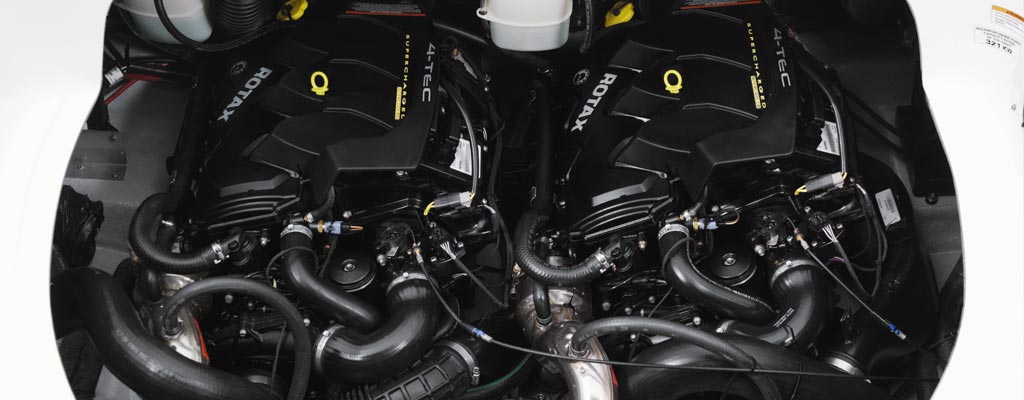
Regardless of your boat’s size and systems, routine inspections and maintenance can alert you to potential problems. Changing engine oil, and checking fluid levels are the best way to keep your boat running smoothly. Even well maintained engines will show signs of age. Leaks from steering cables, drips from the last oil change, or fuel from leaky fittings can all find their way into the bilge.
Explore these topics to learn ways to green your boat maintenance by clicking the tabs below.
Boat Maintenance: All About Engines
Keep your boat running cleanly and efficiently with expert guidance on changing engine oil, fluids, and fuel filters — all while protecting the water you love. The engine maintenance tips below help boaters handle routine upkeep the right way, minimizing spills and environmental impact.
Changing Engine Oil and Other Fluids
- Use a self-contained spill-proof oil extractor to remove fluids. Manual and electric pumps can be found at most marine retail supply stores.
- Temporarily disable your bilge pump so that it does not cycle on in the case of a spill. Use an oil-only absorbent pad under the engine and in the bilge to absorb spills. Place a plastic bag around the filter before removing to catch drips.
- Top off your fluids, wipe up any spills, and reconnect your bilge pump. Recycle your filter and used oil at a recycling location and dispose of used absorbent pads and rags properly.
Changing Fuel Filters
Fuel can become contaminated or can separate and clog filters if it sits in a fuel tank for too long. Changing your fuel filter is especially important if you boat in an area that has recently switched to ethanol formulated gasoline. Ethanol has a tendency to clean out fuel systems, resulting in the need to change your fuel filter more frequently with the first few tanks of ethanol formulated fuel.
Changing spin-on or in-line primary fuel filters is relatively easy. However, changing some secondary filters (the one that tends to be mounted out of the way or internally in the engine) can be more difficult than your average fuel filter change and tends to be overlooked by many do-it-yourselfers. When in doubt, refer to your engine manual or let a professional handle it. Proper fuel flow and filtration is essential to smooth operation. Regardless of engine size, routine inspections can alert you to potential problems.
Tips for Changing Fuel Filters
- Clean off any dirt from around the old filter and filter housing.
- Temporarily disable your bilge pump so that it doesn’t cycle in the case of a spill.
- Use an oil-only absorbent pad under the engine and in the bilge to absorb spills.
- Use a bucket or cut the top off of a plastic soda bottle to catch fuel overflow.
- Empty the bowl into the bucket and dispose of in a waste fuel bin at your marina.
- Clean the bowl or housing with an oil-only absorbent rag before replacing element.
- Lubricate “O” rings and prime the filter and fuel line as necessary.
Bilge Care
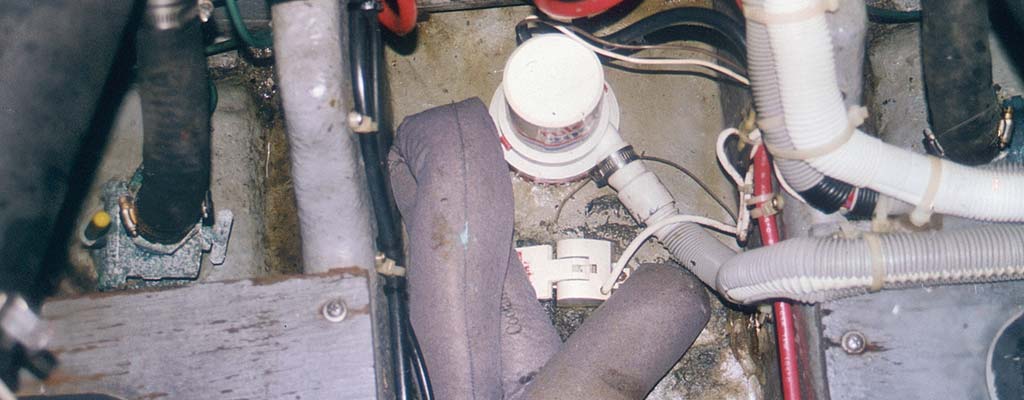
Any oil in the bilge puts you at risk for an overboard discharge. Petroleum products discharged from the bilge are no different than spills at the fuel dock. Any spill that creates a sheen on the water can bring hefty fines.
Tips to prevent petroleum products from mixing with bilge water
- Keep your engine tuned to minimize oil leaks.
- Check that clamps and filters are sealed properly.
- Inspect hoses and belts for peeling or cracking.
- When replacing hoses ensure they are the correct length, hoses that are too long or stretch to fit are prone to kink or collapse.
- Place an oil-absorbent pad under your engine and an absorbent bilge sock next to (but not interfering with) your bilge pump.
- Wipe up spills, drips and splatters immediately.
- There are many oil-only absorbent products on the market that can help make bilge maintenance easier. Some are oil-only absorbents that absorb oil and leave the water behind, others contain microbes that “eat” the oil over several days or weeks making disposal easier.
- Another alternative in dealing with dirty bilge water is an inline bilge filter. This device is designed to remove petroleum products from your bilge water without restricting bilge pump performance, allowing for a clean discharge. You must periodically check these products for oil saturation and replace filters as needed.
- If absorbent pads and filters haven’t done the trick, a few marinas now offer a bilge pump-out service. It’s still a new concept, so check with your local marine facilities for pricing and availability.
- Bilge cleaners can be a tempting solution to an oily bilge, while they can seem effective, many of these cleaners just suspend the oil in the soap and then both are discharged. If you use bilge cleaners try using a small amount on a cloth and use a hand bilge pump to remove to a bucket and dispose ashore.
A Note About Bioremediation
Absorbent products such as booms and socks that contain microbes or claim to “eat oil” may be used in the bilge of a boat. It is not legal for boaters to use loose or contained bioremediation products on a spill in open water. Only a trained spill response professional can legally apply these products to an open water spill.
For bioremediation products to work in your bilge they require the presence of a small amount of water, air temperature above 40 degrees and several days or weeks to be effective. In theory, after given enough time, the microbes will consume all of the oil or fuel, leaving behind clean water. Bioremediating products make disposal easier but do require time some as long as weeks to months to get rid of the oil.
Boat Cleaning
Keeping your boat clean is important part of maintenance
But soaps and harsh cleaners running off into the water can have a negative impact on our waterways. While a few bubbles in the water seem harmless, soaps work by breaking down cell membranes, that is why most cleaners are toxic to marine life.
Tips to Minimize the Impact of Boat Cleaning
- If your marina has a designated wash down area use that for all boat cleaning.
- Regularly rinse the boat with fresh water to avoid needing harsh cleaners.
- Power washing or high pressure washing can remove bottom paint so it is especially important to save pressure washing for when your boat is in the washdown area.
- When you must use soaps, read the labels carefully. Look for non toxic and biodegradable products and use them sparingly. Don’t believe all environmental claims. Most products require treatment in wastewater treatment plant to be truly non toxic and biodegradable, so use them in an area that doesn’t drain directly to the water. Grassy areas can help absorb runoff.
foundation findings
Green Cleaner Product Testing
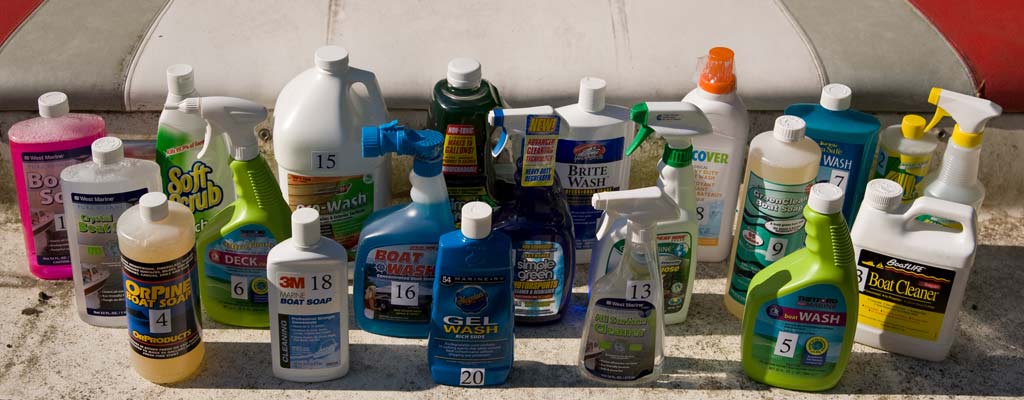
We examine so-called green boat soaps to see if the soaps live up to their environmental claims and, if truly green, if they still clean well.
Alternative Cleaning Products
If you don’t mind a little extra elbow grease consider trying some of these alternative cleaning products:
- All Purpose Cleaner- Mix one cup white vinegar with two gallons water.
- Aluminum Cleaner- 2 Tablespoons cream of tartar in 1 quart hot water.
- Ammonia-Based Cleaners- Vinegar, salt, and water.
- Bleach- Borax or hydrogen peroxide.
- Bronze Cleaner- Lemon juice and baking soda. Or equal parts of flour and salt with enough vinegar to make a paste.
- Chrome Cleaner/Polish- Apple cider vinegar to clean; baby oil to polish.
- Fiberglass Stain Remover- Baking soda paste.
- Head Cleaner- Put in baking soda and use a brush.
- Mildew Remover- Paste using equal parts of lemon juice and salt or white vinegar and salt.
- Rug/Upholstery Cleaner- Sprinkle on dry cornstarch and then vacuum.
- Stainless Steel Cleaner- Baking soda or mineral oil for polishing, vinegar to remove spots.
- Varnish Cleaner- Wipe with 1⁄2 cup vinegar and 1⁄2 cup water solution.
- Window Cleaner- Mix two tablespoons vinegar in one quart of water or rub glass with newspaper.