
Flares & Distress Signals
Safety First
What you need to know about flares and distress signals before your next outing
Visual distress signals (VDS) are an important communication tool. Check them regularly for proper condition and inspect the expiration date to be sure they are current.
Use the tabs below to explore all Boating Safety content related to flares and distress signals.
Requirements for Flares & Distress Signals
The visual distress signal requirement for recreational boaters states that all boats when used on coastal waters, including the Great Lakes, the territorial seas and those waters directly connected to the Great Lakes and the territorial seas, up to a point where the waters are less than two miles wide, and boats owned in the United States when operating on the high seas must be equipped with visual distress signals. There are a handful of exceptions so you should always check your state regulations to be certain you comply.
Regardless of exemptions, all boaters should be able to signal for help. Boaters must have current dated US Coast Guard-approved day and night signals for all boats operating on coastal and open bodies of water.
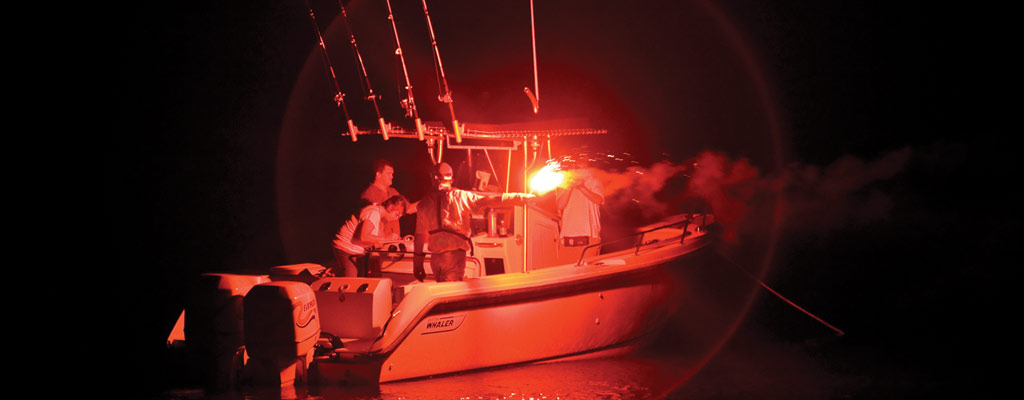
Federal requirements are as follows
For boats 16′ in length or greater: Distress signals are only required when operating between sunset and sunrise. If operating at night, one electric distress light or three combination day/night red flares are required.
For boats 16′ in length or greater: One orange distress flag and one electric distress light – or – three hand-held or floating orange smoke signals and one electric distress light – or – three combination day/night red flares; hand-held, meteor or parachute type.
Flare Test Example
How to Use Distress Signals
A visual distress signal’s intended purpose is to summon help should the need arise and should be displayed only when immediate or potential danger exists. Visual distress signals can only be effective when someone is in a position to see them. Therefore, when employing pyrotechnic devices, do so only when you see or hear a boat or airplane or you are reasonably sure that someone on shore is in position to see your signal and take action. Good judgment is an essential part of successful use of visual distress signals.
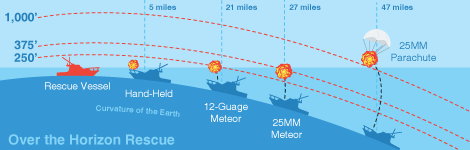
Examples of Pyrotechnic and Non-Pyrotechnic Devices
- Red Hand-held Flare (day and night)
- Parachute Flare (day and night)
- Red Meteor (day and night)
- Orange Smoke Signal (hand-held/day only)
- Floating Orange Smoke Signal (day only)
- Orange Signal Flag (day only)
- Electric Distress Light (night only)
Headline VDS Example Videos here
Visual distress signals, especially pyrotechnic devices, are typically not deployed just to practice. In fact, it’s against the law. That’s why many people are not familiar with how to safely use and care for these devices. To show you how to use visual distress signals as designed and to use them safely, watch the videos below.
What if you see a Visual Distress Signal given off by another vessel?
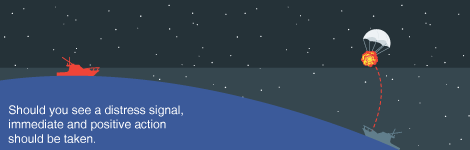
A mariner must aid another mariner in distress. Therefore, should you see a distress signal, immediate and positive action should be taken. Notify the nearest Coast Guard station or State authority by radio. Channel 9 on CB and Channel 16 on VHF marine radio (156.8 MHz) are recognized distress channels. If you can assist the stricken vessel without endangering yourself, you should.
The Federal Boat Safety Act of 1971 contains a “Good Samaritan” clause stating:
“Any person…who gratuitously and in good faith renders assistance at the scene of a vessel collision, accident, or other casualty without objection of any person assisted, shall not be held liable for any act or omission in providing or arranging salvage, towage, medical treatment, or other assistance where the assisting person acts as an ordinary, reasonably prudent man or woman would have acted under the same or similar circumstances.”
What Distress Signal Device Is Right for You
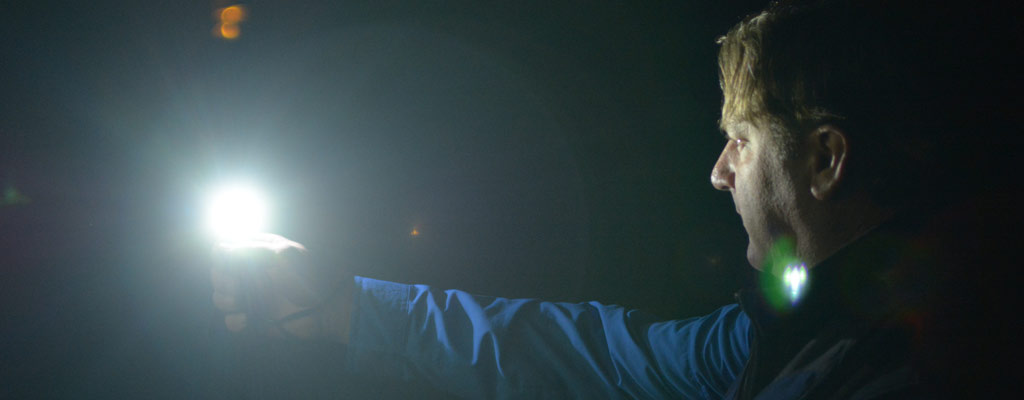
All distress signaling devices have advantages and disadvantages. Smaller pyrotechnic devices are popular due to low cost. Pyrotechnics make excellent distress signals, but they have drawbacks. They can be used only once, and they have an expiration date. Additionally, there is a potential for both injury and property damage if not properly handled and disposal options for expired flares are limited.
Pyrotechnics Devices
Pyrotechnics devices have a very hot flame, and slag (molten discharge) can cause burns and ignite material that burns easily. Projected devices, such as pistol launched and hand-held parachute flares and meteor flares, have many of the same characteristics of a firearm and must be handled with the same caution and respect. Hand held flares on display. The very best flares available in terms of brightness and duration are labeled SOLAS which go above and beyond US Coast Guard minimums.
Watch a video here:
Non-Pyrotechnic Devices
The hand-held and the floating orange smoke signaling devices are excellent (if not the best) day signals, especially on clear days. Both signals are most effective with light to moderate winds. However, in higher winds the winds tend to disperse the orange signal cloud which makes it harder to see.
Watch this video on day use flares to see smoke flares in action: