
Emergency Preparation
STudy Guide
What to Know About Emergency Preparedness on the Water
In this section, you’ll learn about preventing and treating hypothermia, avoiding carbon monoxide poisoning and proper procedures for responding to accidents and crew overboard situations. We’ll also outline what to do if you run aground – how to asses the situation, when to back off, and when to stay put and call for help.
Cold Water
Hypothermia
Don’t Get Left Out In The Cold
One of the most dangerous aspects of boating, particularly for sportsmen who thrive on cold weather adventure, is the risk of hypothermia. Hypothermia happens when the body loses heat faster than it can produce it. It can occur as a result of prolonged exposure to cold air, or more dramatically, when a person is suddenly immersed in cold water. If a sportsman does fall into very cold water, there is only a limited time before he begins to lose his thinking capability and the use of his limbs. Most experts say that half of all drowning victims do not actually die from water filling their lungs, but instead from the fatal effects of cold water.
Hypothermia and You
Water does not have to be icy to be cold enough to bring on hypothermia, it just has to be colder than you. Cold water is considered to be water under 70 degrees, but imagine, even 80 degree water is still almost 20 degrees colder than your body temperature. Given time, your body’s core temperature will drop as you lose heat to the water.
Hypothermia and Hunters
Waterfowl hunters use boats on some of the coldest days of the year. Not only is the water deathly cold on these days, but the hunter is likely wearing enough layers to make himself heavy and clumsy. If he goes in the water, he’s in serious trouble. Here is where a life jacket or a “float coat” can mean the difference between life and death. Without some flotation device, your chances of survival simply aren’t that good.
Overboard – Now What
If you see yourself about to fall in, if possible, cover your face with your hands. This may sound strange, but quickly becoming immersed in icy water can cause “Torso Reflex,” or a sudden involuntary intake of breath. Covering your mouth is an attempt to avoid gulping water into your lungs when this happens.
Try to hold onto something that floats
If you are wearing a life preserver, great. If there are more floating in the water, grab those too to use as floats. Even decoys can be used, one under each arm, to keep you floating. Try to hold onto your boat, or even right the boat and climb inside (some boats are inherently buoyant and float even when filled with water). The idea is to get as much of your body out of the water as possible, so there is less area that can lose heat.
Conserve what heat you can
Tighten up your jacket, vest, shoes, whatever you are wearing. Try and keep your legs together, and your arms close to your body. Most importantly, try to keep your head dry and try to always wear a hat. You will lose over half of your body heat through your head. Even a mesh ball cap will help retain body heat. The water trapped inside your layers of clothes will warm up from your body heat and act as a wetsuit. Do not remove clothing.
Do not try to swim
Unless it is to reach a nearby boat, another person, or a floating object on which you can climb or use for floatation. Swimming pumps out the warm water trapped between your skin and your clothes and brings in colder water. Swimming can also cause debilitating cramps. Furthermore, the movement pumps warm blood to your extremities, where it cools quickly. Swimming can reduce your survival time by almost 50%.
Stay as still as possible
No matter how painful. Intense shivering and severe pain in cold water are natural reflexes that will not kill you, but cold water can. Getting into the “H.E.L.P.” position (explained below) may help you keep your cold arms and legs still.
Be Prepared
If the worst happens, why not be prepared? Here are some things you can do in advance to give yourself a better chance for survival if you do end up in the water. First of all, dress for the water temperature, not for the air temperature. Having lots of layers on will help you survive if you do end up in the water. Secondly, wear a hat. When in the water, 50% percent of your heat could be lost through your head – the hat will help slow heat loss down. Eat high energy foods and carry a candy bar in your pocket; if you fall in, you’ll be glad to have the extra energy. Bring extra clothes in a dry bag or garbage bag and keep them in the boat just in case someone in your party gets wet.
H.E.L.P.
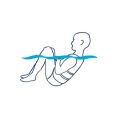
This position, the Heat Escape Lessening Position, or H.E.L.P., aims to protect some of the areas of your body most prone to heat loss – the head, neck, sides of the chest cavity and the groin area. If you are wearing a life jacket, this position can be very effective. To reach this position, you should bring your knees up as close as possible to your chest and grasp your hands together over your chest. If this is too difficult, or too unstable, cross your calves, bend your knees and pull your legs close to your body. Cross your arms and tuck your hands flat under your armpits.
Floating in Waders
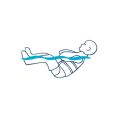
If you find yourself floating in the water with waders still on, try to use them to your advantage. Allow some air inside them so they float on the surface, then hold your hands together behind your knees or your neck and float until help arrives. This position is most effective if you are wearing a life jacket, otherwise you’ll have to use your arms to tread water, or float on your back with your head in the water, which will make you lose heat more quickly.
Huddle
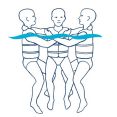
When several people are stranded in the water, they should form a huddle. Facing inward, they should link their arms over each other’s shoulders or under each other’s arms to get as close as possible, to share as much heat as possible. If there are children or seniors along, they should go in the center of the huddle so they can receive warmth front and back. Two or more people huddled together can increase survival time by 50%.
These survival positions are most effective when the person in the water is wearing a life jacket. If the person is not wearing a PFD and is forced to swim, they should do so as slowly as possible. Anything that can be used for flotation – logs, parts of the boat, gas cans, whatever – should be utilized for flotation. The swimmer can also try breathing into his clothing to put air – and hopefully some floatation – into his torso area.
While Waiting for Help
Any victim pulled from cold water should be treated for hypothermia. Symptoms may include intense shivering, loss of coordination, mental confusion, cold and blue (cyanotic) skin, weak pulse, irregular heartbeat, and enlarged pupils. Once shivering stops, core body temperature begins to drop critically. Try to prevent body cooling and get the victim to a medical facility immediately.
- Gently move the victim to a warm shelter.
- Check for breathing and a heartbeat. Start CPR if necessary.
- If you have dry clothes or a blanket, remove the victim’s wet clothes. Use a minimum of body movement, since rough handling can cause cardiac arrest. Cut the clothes off, if necessary.
- Lay the victim in a level face-up position with a blanket or some other insulation underneath.
- Wrap the victim in a dry blanket or dry clothes. If possible, warm the clothes first. If a stocking cap is available, put it on the victim’s head since a great deal of heat is lost from the head.
- If the person is awake and coherent, give them warm (not hot) liquids. Warm hot tea with sugar or honey or slightly-cooled hot chocolate are good since sugars can still be absorbed even if the stomach has shut down.
- Never give a hypothermic person alcohol. Alcohol dilates (opens) your veins, which will make you lose body heat more rapidly.
If There Is No Help
- Apply heating pads or hot water bottles under the blanket to the head, neck, chest, and groin. Be careful not to burn the victim’s skin.
- If these are unavailable, use your own body warmth to warm the victim. Wrap yourself in a blanket together and use as much body to body contact as possible.
- Do not apply heat to the arms and legs. This forces cold blood from the arms and legs back toward the heart, lungs and brain, lowering core body temperature and causing “after drop” which can be fatal.
- Do not massage the victim or give the victim a hot bath. Cardiac arrest is a frequent result of hypothermia, and moving the victim roughly can be a catalyst for this condition.
- Do not give food or drink to unconscious victims.
If You Run Aground
Two kinds of boaters exist, those who have gone aground and those who won’t admit to it. Fortunately, grounding is more often a minor inconvenience than a true danger. Here’s what to do if you get stuck in the mud.
Don’t Panic, Assess the Situation
Panicking won’t help any grounding situation, no matter how minor. And, hasty reactions can end up causing further harm to your boat and crew.
While backing off is usually the skipper’s first instinct, it may not be the best solution. Instead, try to figure out what you hit, how deeply you’re bedded, and if the hull has been compromised.
Then, check your chart for bottom characteristics and tide tables to determine the next high tide. If you were traveling slowly, chances are you’ve just touched bottom lightly.
Soft Grounding
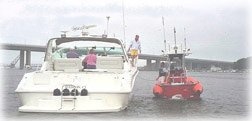
Soft groundings may be described as any grounding that you can free your own boat, even if it takes a great deal of time, or wind, wave, or tide action to help you free the boat. Most soft groundings do not involve major damage, or result in leaks.
Hard Grounding
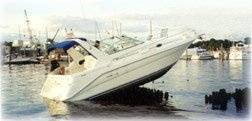
Just like it sounds, a “hard” grounding can quickly turn your day upside down. Striking an object such as a piling, reef, or rocks can destroy your boat, and lead to injury or death.
If you find yourself hard aground, the best thing you can do is stay with your boat, put on your life jackets, and call for help. Do what you can to stop leaks. If the boat is in danger of sinking, or lives are at risk–call the Coast Guard on Channel 16.
Checking for leaks, damage/injuries, and setting the anchor is the first things you should do if you hit bottom. Try to place the anchor as far from the boat as you can–use your dinghy or tender if you have one.
Anchoring helps keep the boat from being driven further aground and may also provide a means of pulling you free, if you can “kedge” or pull the boat towards the anchor. Waves, the tide, and wakes from other boats may lift your boat. Once you’ve set the anchor, you have several options based on your situation.
Backing Off
If you’ve grounded lightly and hull damage appears to be minimal, you can try to free yourself. Determine what’s on the bottom first. While backing off a soft bottom should do less damage to your hull than backing off rocks, reverse prop wash may throw sand and mud towards your bow, grounding you even more firmly.
With engines in reverse, slowly and carefully try to back off. If possible, have some one go over the side and push the boat side-ways in both directions. This may free the boat more quickly than trying to back-up.
- If you are on coral or sea grass, BE CAREFUL! You can cause tremendous damage to either the grass or coral, and subject your self to stiff penalties and fines for destroying them. It’s best to wait for the tide to take you off, or to call a professional tower for assistance.
- If you try to back off, monitor your temperature gauges carefully. The engine raw water intake may suck up dirt and debris and clog or damage your engine’s cooling system. Shut down your engine immediately if you notice a rapid rise in temperature.
If you’re lucky, a good Samaritan will offer to give you a yank. You’ll need to determine the wind and current to make sure you get the best angle on the pull.
When to Stay Aground
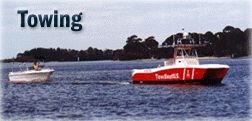
If you’ve sustained serious hull damage, you’re better staying put than reentering deep water. Waiting for high tide is a safe, albeit slow way to get yourself un-stuck. While you’re waiting, you could finish those few, ever-elusive boat chores.
If all else fails and you’re really stuck, a commercial tower can help. Unless you’re insured, this will cost you $150 an hour, on average. Hard groundings are generally considered to be salvage operations, and cost considerably more than the costs of having your boat freed from a soft grounding.
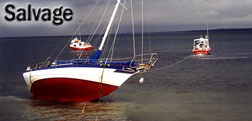
But your safety and security are well worth it, and, you’ll have learned a valuable lesson for the next time. Remember, the Coast Guard will not come out to assist or tow you unless you are in immediate danger. Instead, they will hail a commercial tower to come to your assistance. For more information on towing and salvage, visit the BoatU.S. page on salvage.
What To Do In An Emergency
If you or your vessel are in immediate danger, hail the Coast Guard over VHF Channel 16 using the standard Pan-Pan or Mayday call depending on the urgency of your situation. This may also bring nearby boaters to your aid.
PWC Operators
As you might imagine, PWC operators face different problems when they run aground. In many cases, an operator can generally get off the PWC, and push/pull the boat off of “the hard”.
PWCs are easier to examine for damage–make this a priority when you ground. Check the hull both inside and out for cracks or leaks. Also check that nothing has come loose, and do the “sniff” test for gasoline. finally, check the impeller intake to make sure no debris has entered the jet drive before heading out.
Dealing with an Accident
The best way to minimize damage from a grounding is, of course, NOT TO GROUND YOUR BOAT.
Here are a few tips to help make the topic of grounding not apply to you.
- Know where you are – Sounds easy enough, but things happen. A weather front or fog comes through making it difficult to see. You decide to travel to new places. Many things can put your boat where it doesn’t belong. Having an UP TO DATE chart and compass, a navigation system such as a GPS, and a good dose of common sense will help you avoid putting your boat on the ground.
- Be observant – Part of knowing where you are is to observe the waters that you are on. Do the buoys you just passed match the ones on the chart? Is the tide high or low? Does your crew know what to look for and what to avoid?
- Be smart – The key to avoiding any unpleasant situation in life is to be careful and to be prepared. When you are on your boat, always operate in a manner that is safe for the conditions you are encountering. If you are in a new area, slow down–it will give you time to orient yourself, and it will give you time to react. Best of all, hitting something at low speed is usually less painful than hitting something at high speed. Get as much information as you can about where you are going. What’s the weather like? What are the water conditions? Will there be many boats on the water with you? Knowledge is power – and safety.
Accidents
Sometimes things happen on the water no matter how hard you work to prevent an accident. Accident preparation begins before you leave the dock, and involves everyone aboard the vessel. You should always consult with your pre-departure or safety “checklist” and discuss it with everyone aboard prior to departure. Whether you or someone aboard has a minor accident such as a cut or a bump, or you are involved in a major accident such as a collision, the things you do to prepare you and your crew can mean the difference between life and death.
Pre-Departure
When your guests first arrive, particularly if they are new to the boat, you should take a few moments to go over the following.
- Show everyone where the emergency equipment is–the fire extinguishers, the first aid kit, flares, the horn.
- Fit everyone in a life jacket, and let them hold on to it. Better yet, have them wear it.
- Show everyone how to operate the bilge pump, the VHF radio, the GPS and all other electronic equipment.
- Go over your trip plan, and show them where you are on a chart, and where you are going on the chart.
- Show them where the anchor is, and how to use it.
- Show everyone where extra lines are, and how to tie the boat up.
Other things to instruct your guests on is how the boat handles in rough water, particularly if you are out on a busy day, or the weather may get nasty. Also show people how to use the head, and how to dispose of garbage.
Giving your guests as much information on how to be a good boater will make them–and you safer, and help them to have a more enjoyable time on the water.
Pre-Departure
One type of accident that occurs more frequently than you may realize is capsizing. A boat is “capsized” when it is knocked down so it lies on its side in the water or turns over – a frequent occurrence among small sailboats that are especially sensitive to sudden changes in the wind. Most small boats will remain in that position, unless righted, and will float enough to support you.
Having capsized or swamped, it is important to remain calm and conserve energy. After the boat capsizes, you should immediately do a head count to make sure everyone is with the boat. The general rule is to ensure that all crew members are wearing PFDs and that they stay with the boat; there may be possibilities of righting it, and rescuers will be able to find you more easily. Leave the boat only if it is headed toward a hazard.
If you do lose the boat, try and use anything you can to help you stay above water. An empty cooler is a great floatation aid–even empty soda bottles stuffed in your jacket will help. The higher you are in the water, the easier it will be to find you. The easier it is for you to float, the easier it will be for you to conserve energy.
If the capsized boat is a small centerboard sailboat, improve your chances of recovery by trying to keep it from turning over. Get into the water immediately and stand of the centerboard, providing lever action; this is a technique taught in most basic sailing courses.
If possible, have a crew member attach a life jacket or other flotation device to the end of the mast. If you can, remove all sails before attempting to right the boat.
If you have lost your boat, or can’t right it, your next step is to try and get help. Signaling for help takes a great deal of restraint–if you do too much you may tire yourself out, or run out of signals such as flares. Try and make sure that when you do signal, there is a good chance that someone will see or hear you. Having signal flares, smoke flares, whistles, or a horn (which you should have on your boat) are great, but if all you have is an upside down boat, the crew and you, your options are limited.
- Take turns being the designated “signaler” who yells at a regular interval, or waves at passersby.
- Try and make everyone as “big” as possible (put on what you can, pull floating debris near you, etc.), and try to contrast with the background by wearing light clothing (or vice versa).
- If you do have appropriate signaling devices, use them when you think they will be seen or heard.
Getting rescued starts with letting people know where you are going, and when you should be back. Filing a float plan will ensure that people will be looking for you. Carrying proper signaling devices such as flares or smoke will help you get found–we’ve even heard of people painting the hull of their boat florescent orange to make it visible if they ever capsize. Even the clothes you wear can help you survive longer and get rescued faster.
Take precautions against swamping and capsizing: Watch that loaded items do not shift from side to side; guard against too much power or speed on turns, and the wash of large boats. Take waves head on, or fine on the bow, at low speeds, giving the hull a chance to ride over rather than dive into them.
Crew Overboard
Another type of accident that can occur on the water is having someone fall overboard. Crew-overboard (COB) victims face a number of dangers, including panic, injury during the fall and hypothermia. For those aboard the boat, quick thinking and coordinated action are essential to an effective rescue.
Control of the situation is most likely to be maintained by those who have prepared themselves with regular drills.
However, not many people ever consider how to handle this situation, let alone actually practice COB procedures with the crew. Before you even leave the dock there are several things you can do to increase the chances of you or your crew should someone fall overboard even without practicing COB procedures.
Have lifejackets equipped with whistles and waterproof flashlights.
For less than ten dollars you can increase someone’s chances of quick pick up (especially at night). Better yet, wear your life jacket! In cold or heavy weather and at night, you are much better off wearing your life jacket.
Practice throwing a life ring or cushion.
They are quite a bit harder to throw than you might think! You can easily practice on your dock to check your range and accuracy-you will probably be very surprised by the results.
Show everyone where life saving gear is located, and how to use it.
Knowing how to use equipment will save valuable time when it counts.
While on the water your first priority is to not panic. The best way to do that is by practicing your COB procedure regularly. Pick a rescue technique such as the “quick-stop” or “figure eight” (described in great detail in many seamanship books). Acting on instinct and acting immediately will save time and reduce panic for you and your crew.
Some Tips
- Stop the boat’s forward progress. Every second that you move away from the COB will make it harder for you to get back to them.
- Take a head count to see who fell overboard. Knowing who (or how many) fell overboard will help you plan the rescue. For instance, if the largest person on the boat fell overboard, it might take more equipment or people to bring that person back aboard. Knowing who you are going after will help you decide who needs to do what in the rescue.
- Assign roles to crewmembers. Such as having a lookout, to keep people involved in the rescue.
- Get floatation to the person. Items such as a Lifesling will help keep the swimmer afloat and help you get them into the boat.
- Get the boat next to the COB. Placing your boat between the swimmer and the wind (upwind) will give a lee to the person and will give them flatter seas, but you run the risk of floating over them, which will take away your ability to steer due to the danger of the propeller.
- The better way is to have the swimmer between the boat and the wind by approaching the swimmer from downwind. This will increase your ability to maneuver, and will take less time to get the person to the boat.
- Get the person on the boat. This can be very difficult, especially if the person is hurt, weak, or unconscious. Lifeslings, swim platforms, ladders, and brute strength are all methods of bringing someone on board. Practice all and pick the best one for your boat and crew. For further reading on COB rescue equipment, check out Foundation Findings articles.
- Never have anyone go into the water. They will just be another person that needs to be rescued. If someone needs to go over to help a week or injured person, make sure they have floatation and a lifeline secured to them.
Preventing Crew-Overboard Accidents
Slipping and Falling
Even in calm, dry weather, decks can be slippery- salt incrustations attract moisture. Plastic decks can be especially dangerous because they are smooth and do not absorb moisture; the molded anti-skid pattern traps evaporated salt in the indentations.
In contrast, unfinished teak absorbs moisture and presents one of the best non-skid surfaces, wet or dry. A number of aggressive non-skid patterns and coatings are uncomfortable for bare feet, remember one rule of thumb of the careful boater: Wear deck shoes at all times, especially when underway.
Relieving Over the Side
One of the most common causes of COB and subsequently drowning is a crew member relieving himself over the side of the boat in a standing position. Avoid this disaster; go below and use the head.
Safety Equipment Failure
When equipment is undersized, old or worn, it can be worse than no equipment at all: It provides a false sense of security. Lifelines, harness tethers, fittings and snaps should be inspected regularly for wear and corrosion, as well as proof-tested for 3,000 pounds- the shock load of a crew member projected in the lifelines, falling overboard and dragging in water.
The Importance of COB Drills
Unfortunately, despite all preventive efforts, accidents can still occur. The need for crew-overboard drills cannot be emphasized enough. Your entire crew should practice the maneuver until recovery is second nature.
Practice often first with a floating cushion, then with a swimmer and another boat standing by. These drills can often make the difference between a tragedy and a mishap on the water.
With practice and the right equipment, you can safely and quickly recover someone who has fallen overboard. Crew-Over-Board procedures should be practiced at the beginning of every boating season and from time to time over the course of the boating season. Doing so may save someone’s life- even your own.
Reporting Boating Accidents
Should you find yourself involved in an accident, you must follow certain laws.
The operator or owner of any recreational boat is required to file a Boating Accident Report (BAR) if the boat is involved in an accident that results in:
- Loss of life; or
- Personal injury which requires medical treatment beyond first aid; or
- Damage to the boat and other property damage of $2,000 or more; or
- Complete loss of the boat.
Boat operators are required to report their accident to local authorities in the State where the accident occurred. Keep in mind that the $2000 dollars in property damage is a federal guideline–many states have reporting requirements that start at $500. Refer to the state boating law pages of this course for more information. Select your state and choose “State Requirements” on the resulting page.
Fatal Accidents
Immediate notification is required for fatal accidents. If a person dies or disappears as a result of a recreational boating accident, the nearest state boating authority must be notified without delay. The following information must be provided.
- Date, time and exact location of the accident.
- Name of each person who died or disappeared.
Reporting Timelines
- If a person dies, disappears from the boat, or there are injuries requiring medical treatment beyond first aid, a formal report must be filed within 48 hours of the accident.
- A formal report must be made within 10 days for accidents involving property damage of $2,000 or more, or complete loss of a vessel.
Note: State requirements for Reporting Boating Accidents may be more stringent than Federal (i.e. some States require ALL boating accidents to be reported immediately). Check with the Boating Law Administrator in the State where the accident occurred for proper reporting procedures.
Rendering Assistance
Finding immediate help on the water is often not as easy as flagging down a passing motorist on a busy highway. As such, boaters should be aware of their surroundings and the possibility that a fellow boater may need assistance. In a true emergency, there may be no time for flares or other signaling devices – so the flailing of arms may be the only thing that alerts you to a potential problem.
- As a boater, you are required to render assistance if you are involved in or witness an accident, or happen upon an emergency situation, as long as it does not endanger you, your crew or vessel, or further endanger those involved.
- The law protects those that render assistance and protects the Good Samaritan from damages as a result of rendering assistance, as long as the individual acts as an ordinary, reasonable and prudent individual would under the circumstances.
What Can Go Wrong
Planning ahead means considering what could go wrong, and thinking of how you as the skipper will handle it–or how you crew will handle it if something happens to you.
Prudent skippers not only have a plan that they stick to, they also make sure the crew knows the plan, and can act accordingly in case of an emergency. When your guests come aboard, it’s time to share information with them about your boat, and about your trip.
The information you need to share in this orientation will depend on your boat and how complicated things are. Try to establish a list of what can help your crew become better oriented to your boat.
Finally, make sure that someone ashore knows where you are going, and when to expect you back. Here is a simple float plan, provided to help you determine what information is helpful to rescue personnel. Leave your float plan with a responsible relative or friend – don’t file your float plan with the Coast Guard.
Carbon Monoxide
The Risk of Carbon Monoxide
A couple in Michigan arrived at their boat last October, started the gas generator, turned on the boat’s electric heater, and set to work on a few end of the season projects. While they were working, carbon monoxide (CO) from the gas generator began creeping quietly into the main saloon somewhere down in the bilge.
Without a CO alarm, there was no way that the couple could have been aware-or even had the tiniest hint – that the deadly gas was mixing with the oxygen in the boat’s cabin. CO is colorless and odorless, and it produces initial symptoms-drowsiness, headaches, nausea, or dizziness–that aren’t especially alarming.
The unsuspecting couple soon “fell asleep,” and would have died had it not been for the early arrival-almost two hours early-of their son. He quickly shut off the generator, opened ports, and phoned the rescue squad. They were extremely lucky; most CO claims have a much sadder outcome.
An investigation afterward concluded that the CO had come from a drain plug in the generator’s muffler that had worked loose and lay in the bilge. The report also noted the lack of a CO detector aboard, which wasn’t a surprise.
Of a dozen or so recent claims for CO fatalities or near fatalities in a boat’s cabin, the lack of a CO detector is the only thing that all of them had in common.
CO can enter a cabin from many different sources, according to the claim files: from a hot water heater; from a galley stove; from the “station wagon effect”-exhaust from the boat’s exhaust; from a generator; and even from other nearby boats. There have also been several injuries from people swimming under swim platforms when an engine or generator was being operated.
Certainly it is important to recognize the symptoms of CO poisoning: headaches, drowsiness, and nausea. With most of the BoatU.S. claims, one or more of these symptoms were present, but victims did not recognize the danger they were in.
It is also advisable to inspect the engine and generator for leaks in the exhaust system and to avoid, or try to avoid, the many different situations that could bring CO into a boat’s cabin.
That isn’t easy. Besides the station wagon effect, accidents have been traced to wind direction, proximity to a dock or seawall, boats rafted together, an open hatch or port, a canvas cover, or combination of several causes.
It isn’t unusual after an accident for an inspection to spend many hours, or even days, trying to ascertain how CO got into a boat’s cabin.
While guarding against the many possible sources of CO is certainly advisable, the most reliable safeguard is a CO detector. As of August 1, 1998 the American Boat and Yacht Council (ABYC), the organization that writes the voluntary standards for recreational boats, began recommending that all boats with enclosed accommodation areas and a gasoline generator or a gasoline inboard propulsion engine have a CO detector installed.
Diesel engines are not included because they are much less likely to produce deadly levels of CO. The recommendation that CO detectors be installed on new boats is great news for anyone who will be buying a new boat, but what about boats built before August 1998?
Installing a CO Detector
A Few Considerations
One reason that ABYC may have been slow to recommend the use of CO detectors may be their reputation in the past for emitting unnerving false alarms periodically. You could almost count on a CO detector made prior to 1992, the older “single point” alarms, to sound whenever they detected even the slightest trace of CO.
Since a whiff or two of CO is likely to drift into a cabin several times a day, the frequent alarms were an ongoing nuisance. After 1992, however, manufacturers began making more technically advanced units that use “time-weighted averaging” to greatly reduce the number of alarms.
By averaging the CO over a period of a few minutes, these newer alarms will not sound unless they repeatedly detect CO.
Some of the newer units can even do things like disengage the generator if CO is detected. A proper marine CO detector, incidentally, will have the UL 2034 marine mark, which means it was tested by Underwriters Laboratories standard 2034.
ABYC does not say where on the boat a CO detector should be located. The gas, which is about the same weight as oxygen, tends to dissipate evenly in an area and isn’t any more likely to be found up near the ceiling or down by the cabin sole.
As a practical matter, placing an alarm at eye level allows you to easily monitor any meters or warning lights on a unit.
Sleeping areas, main saloons, an enclosed fly-bridge, and anywhere else people spend time are candidates for a CO detector. Areas that should be avoided include near hatches or doors where fresh air might distort readings. Dead air spaces-corners-should also be avoided.
Taking CO Detectors Seriously
While the older alarms were often a nuisance, the improved technology means that when a newer alarm sounds it should be investigated.
CO that drifts in and out of a cabin can be dangerous, since the effects of CO are cumulative and can build up gradually in a person’s bloodstream over hours or even days before it reaches critical levels.
This is true even if when the person breathes fresh air periodically; the CO remains in the bloodstream. How quickly the CO builds up is a factor of the concentration of the gas being inhaled (measured in parts per million [PPM]) and the duration of the exposure.
The half-life of CO is approximately five hours, which means that it takes five hours for the level of CO in the blood to drop to half its level when exposure was terminated.
There is also some recent research challenges traditional thinking that the effects of CO poisoning are transitory. Studying 96 victims for one year beyond their exposure, researchers found over 25% showed evidence of brain damage 12 months after exposure. These long-term CO injuries can include apathy, memory loss, inattention, and depression.
How Much CO is Too Much (in Parts Per Million)
- 200 PPM – Slight headaches within two to three hours.
- 400 PPM – Frontal headaches within one to two hours.
- 800 PPM – Dizziness, nausea, and convulsions within 45 minutes. Insensible within two hours.
CO Concentration at the Source
- Gasoline Engine – 10,000 – 100,000 PPM
- Diesel Engine – 1,000 PPM
What’s Wrong With This Picture
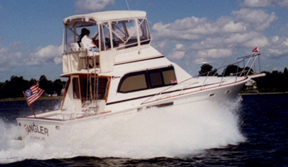
Shortly after she bought her 33′ Egg Harbor, Terri Parrow, Vice President of Internet Operations at BoatU.S., took an action photograph of the boat as it went zooming by near Solomon’s Island, Maryland.
The photo turned out well, with a blue sky, puffy clouds, and lots of exciting spray.
The more she studied the photograph, though, the more it seemed that something was wrong. Then it dawned on her that the ship’s ensign–the flag on the stern–is flapping forward, toward the two people on the flying bridge, Aren’t flags supposed to point aft?

The canvas on the fly-bridge had just been added and when the flaps were closed exhaust from the boat’s twin 340 hp gasoline engines was being sucked back into the cabin and onto the fly-bridge (the “station wagon effect). After seeing the photo, Terri made some changes.
First, she cruises with the forward canvas flaps and hatch on the foredeck opened slightly to keep fresh air flowing throughout the fly-bridge and cabin. And she also replaced one the boat’s two CO detectors, which had been inoperable.
These two simple changes have saved her a lot of potential headaches, or worse, whenever the boat is underway.